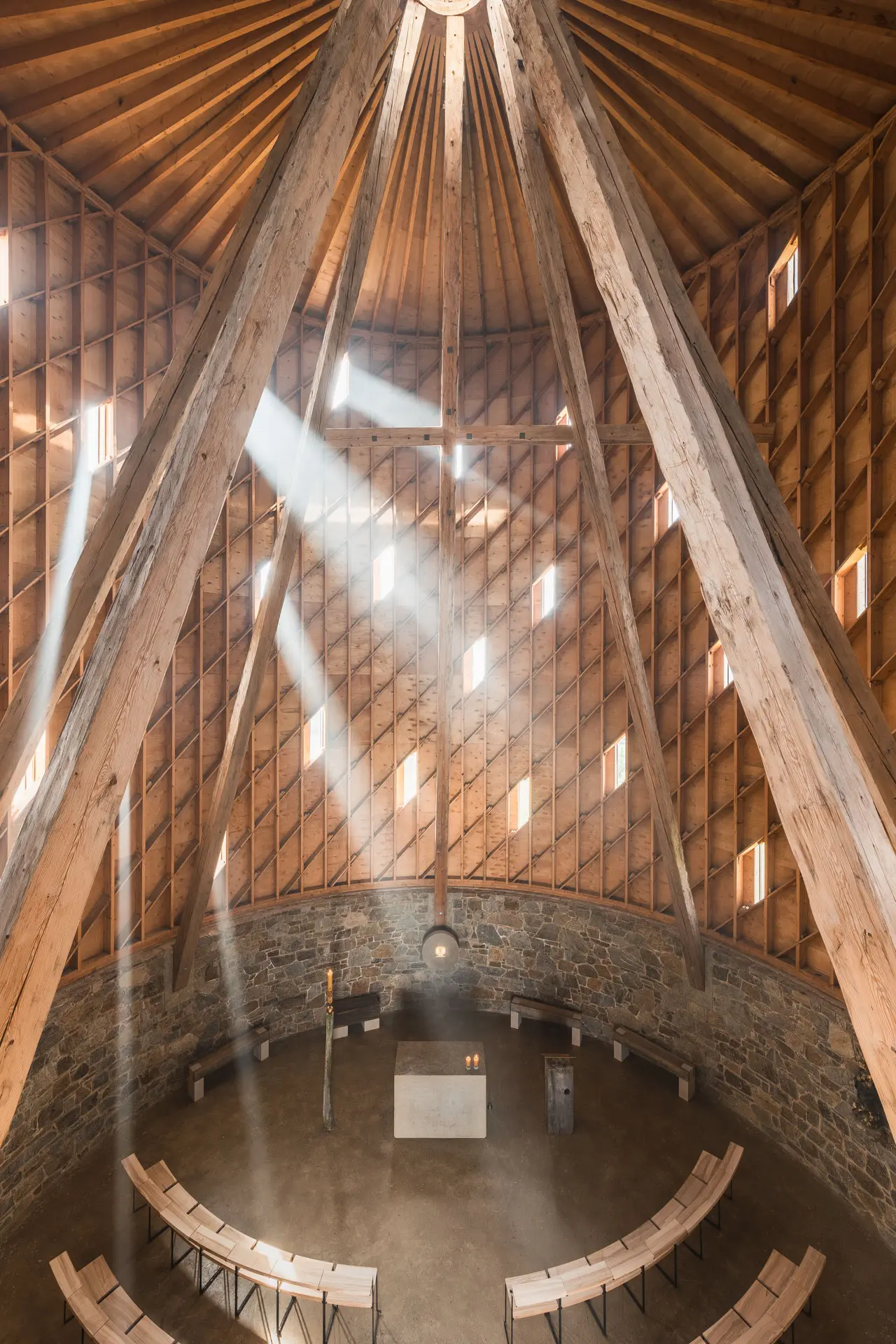
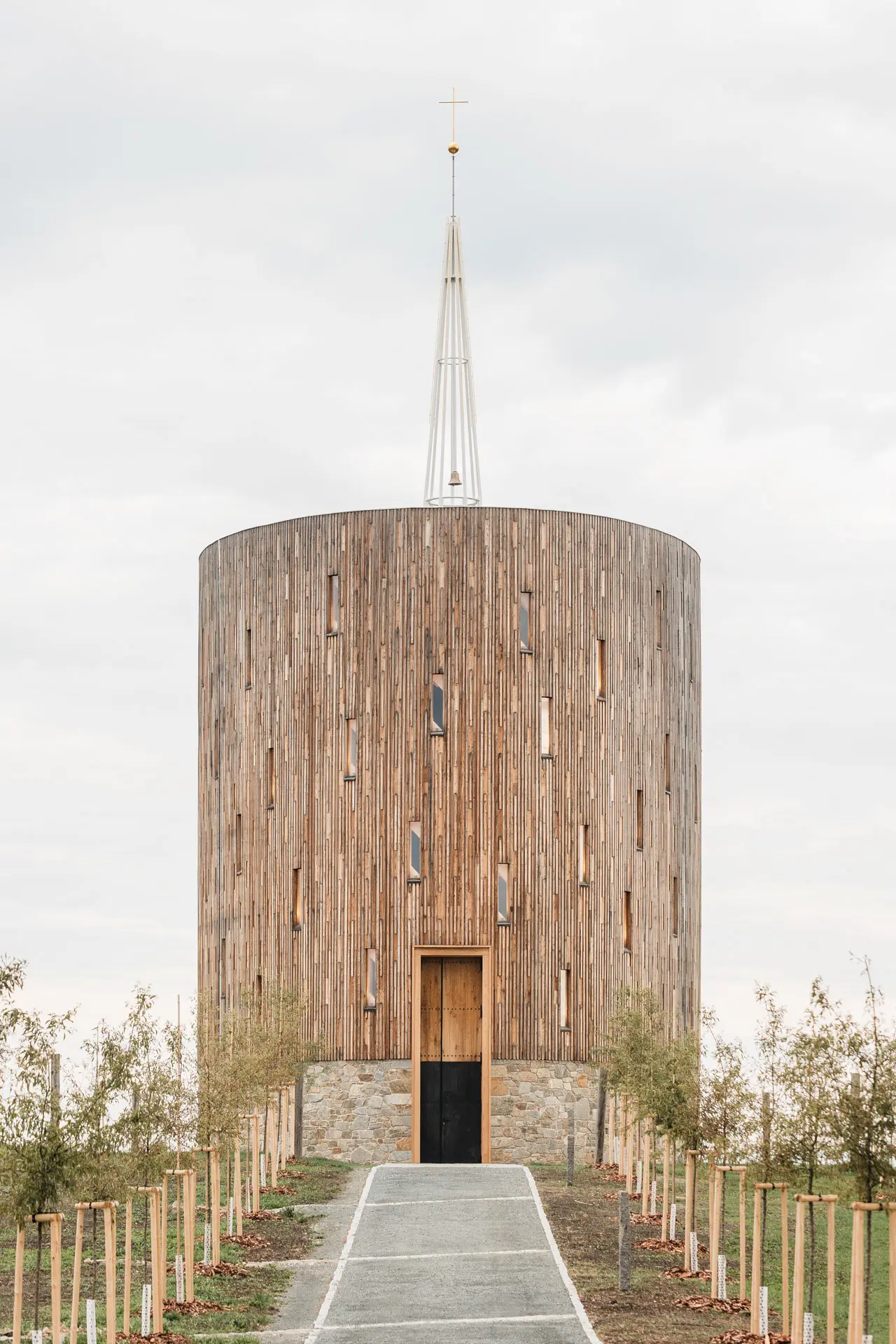
When you look at the Chapel of Our Lady of Sorrows in Nesvačilka, you see a breathtaking structure that rightfully received the highest award in domestic architecture – the Grand Prix Architects Main Prize – the National Award for Architecture 2025. However, what remains hidden at first glance is the story of determination, technological innovation, and respect for traditional materials, which was also written within the walls of our production facilities.
The Story of Courage: How the Hrdlička Family Turned Vision into Reality
The story of this unique building, designed by architect Jan Říčný from the architectural studio RCNKSK, is proof that when traditional natural materials are combined with the latest technology and the courage to innovate, works are created that have a soul. Wood, which originates from living nature, retains the energy, texture, and variability that cannot be artificially replaced. Our role is to process this noble material with respect for its properties, while also applying the technical precision that breathes new life into it in a modern context. This is a philosophy that we at OAKCENT know well and follow every day. It was indeed the Hrdlička family who helped turn the bold dream of a chapel into reality.
When others stopped believing, we started creating.
The journey to the award-winning building was not easy and took a full 12 years. In the beginning, the project faced skepticism from donors regarding its completion. Funding was therefore slow, and it seemed that only a stone fragment would remain on site, towering to the sky as a memento of an unfinished dream. Many labeled the completion of the complex wooden structure as a technological absurdity.
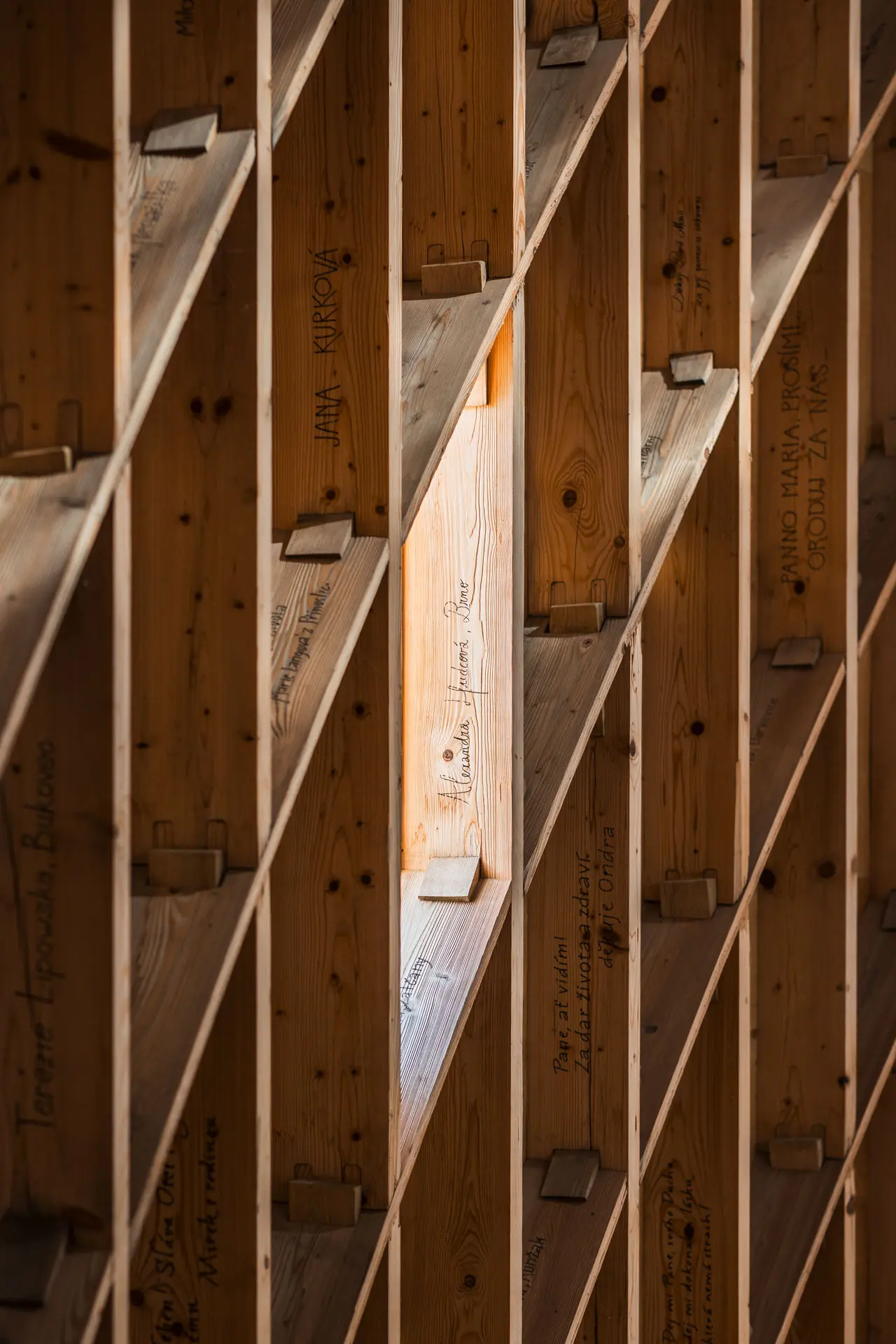
At that moment, Karel Hrdlička the elder entered the story. He offered a solution with the help of a CNC machine that he had purchased for this purpose, along with the necessary space and facilities. He recognized that the key to success was not just carpentry skills, but primarily precise engineering processing of wood. Karel Hrdlička the elder did not hesitate and set to work on producing individual slats. These could then be symbolically 'adopted' by donors and supporters of the project, thereby financially supporting the actual realization of the Chapel. The entire unique structure could thus be created solely from donations.

From raw beam to architectural gem.
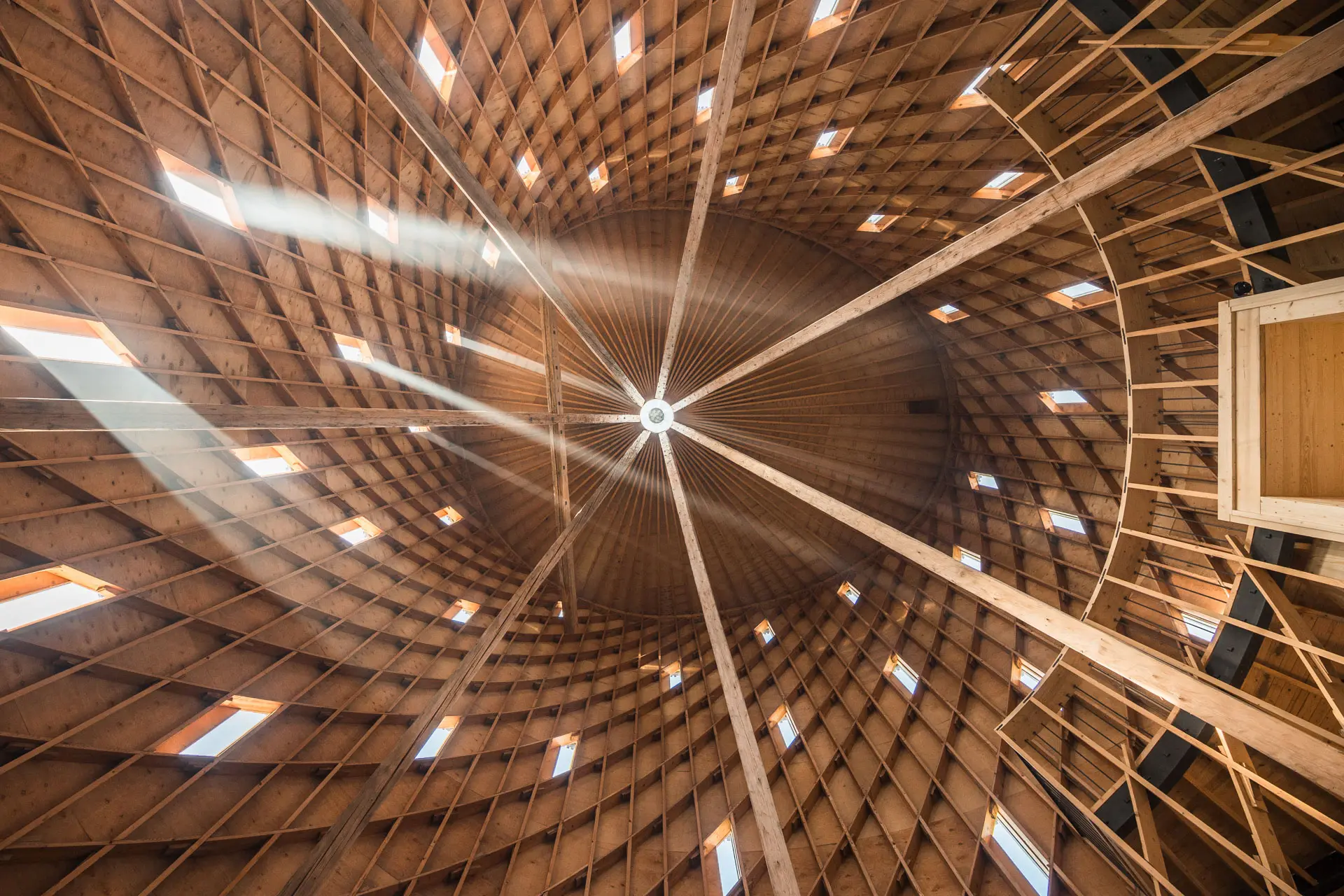
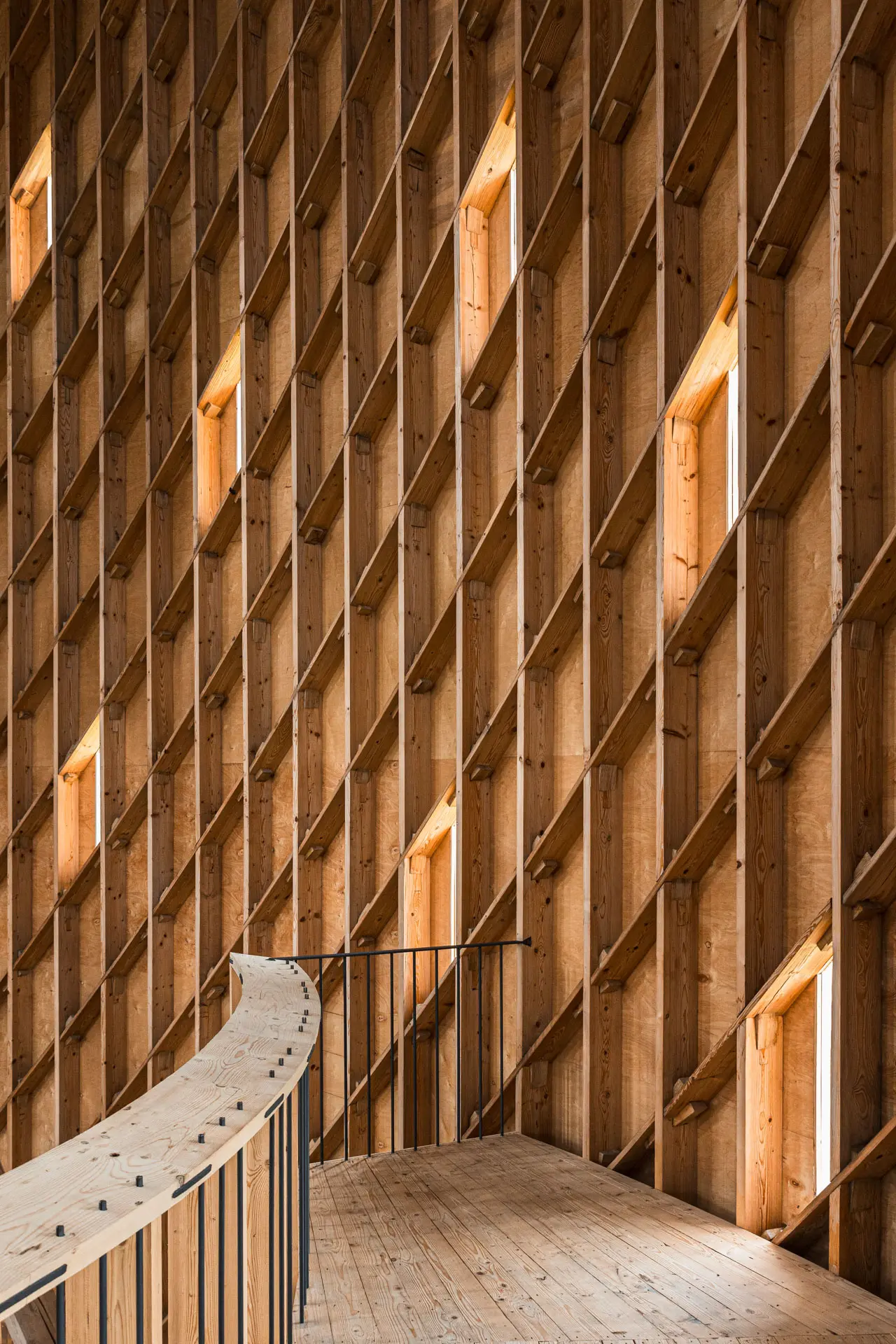
The production of the slats for the chapel was a huge challenge. It was not ordinary lumber. Each slat had to be made with great precision, but it was also taken into account that wood expands and contracts, so the design and production had to respect the principles of natural wood and select it carefully. The slats were wire-brushed to enhance the natural texture of the wood and equipped with dowel joints modified for CNC capabilities.
The wooden structure that today forms the dominant feature of the chapel was created over a long period on our CNC machine. It involved hours of programming, testing, and precise work, during which solid wood was transformed into lightweight yet exceptionally strong elements under the constant supervision of carpenter David Šebesta, fitting together perfectly on the construction site. As a testament to this effort, we still have one original lamella preserved at the company – a reminder that with a diligent approach and the right technology, we can achieve even the seemingly impossible.
The legacy that continues in every Oakcent floor.
This approach – not being afraid of challenges and using technology to achieve perfection – was also adopted by Karel Hrdlička Jr., the son of Karel Hrdlička Sr. He built on his father's experience in woodworking and founded the brand Oakcent, specializing in the production of premium multilayer wooden floors.
Just like the chapel in Nesvačilka required top-notch CNC technology, the production of our floors is based on the connection of honest craftsmanship with the most modern machines.
Your floor with Grand Prix precision.
At Oakcent, we take pride in the fact that our production has not remained stagnant. Today, our facilities are equipped with modern robotic workstations and a state-of-the-art five-axis CNC center, which pushes the possibilities of wood processing even further than during the time of the chapel's construction.